
 Jackie Long
How to Build a Gravel Road With Perma-Zyme
Discover how you can use Perma-Zyme to build gravel roads that last longer with less maintenance, so you can do less rework and free up your crews.
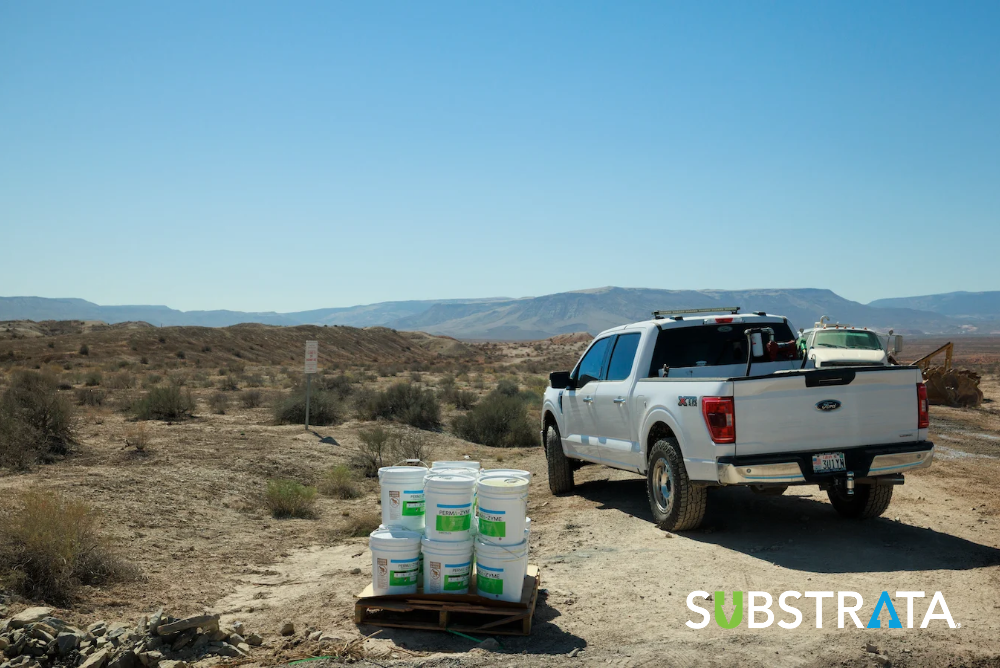
Gravel road maintenance is a continuous cycle that county commissioners and road crews know well. The ground thaws, heavy traffic causes shifting, ruts and potholes form, and people complain. So, you dispatch the motor graders, haul in fresh aggregate, and patch up the soft spots.
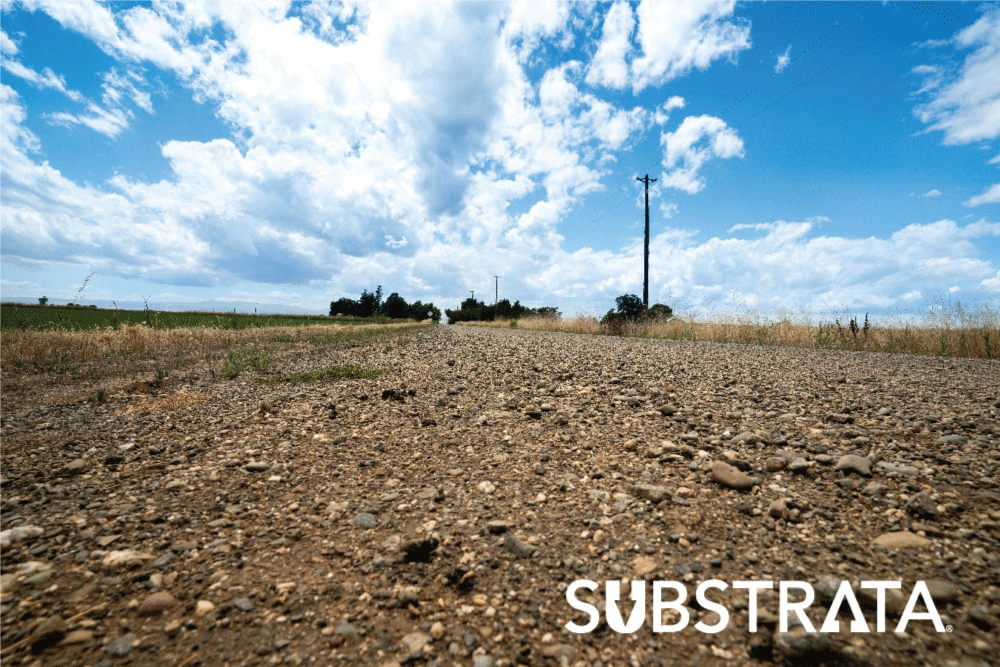
By mid-summer, half of that new gravel has migrated and is now sitting in the drainage ditch, washboards have returned, and the roads once again need work. Repeatedly re-graveling and blading these same unpaved roads can strain your already tight budget as well as department resources.
But you can change all that. Taking a proactive approach to road stabilization breaks this cycle, protecting your county’s infrastructure along with taxpayer dollars.
If your road department relies solely on routine blading and dumping fresh aggregate, you end up paying for the same material over and over. First, you purchase and haul the aggregate. Then, month after month, county operators spend valuable fuel and equipment hours pulling that rock back out of the ditch after traffic knocks it off the road.
So you end up spending more time, resources, and budget fixing the same problematic roads instead of investing in new projects, and bigger initiatives fall behind. Essential bridge repairs, culvert replacements, and drainage improvements get pushed back because routine gravel maintenance consumes your department's labor, fuel, and fleet availability.
Even worse, you have to continually do more with less when rising costs and budget cuts cause more strain on the county’s already stretched thin department. Aggregate costs alone saw a compound annual growth rate (CAGR) of 5.8% between 2015 and 2025. Those costs add up quickly when you’re dealing with a small budget.
To slow down gravel loss, road departments often turn to topical chemical treatments or traditional stabilization techniques. While these methods offer short-term relief, each comes with distinct trade-offs.
| Method | What It Is | Common Experience | The Drawback |
| Chlorides (Calcium or Magnesium Chloride) | Liquid or flake salts applied directly to the surface to pull moisture from the air, bind fines, and suppress dust. | Chlorides are the industry standard for localized dust control in front of rural homes or at high-traffic intersections. | They are temporary band-aids. Heavy rainstorms wash chlorides out of the roadbed, requiring frequent re-application. Over time, chlorides also accelerate corrosion on county fleet equipment, haul trucks, and bridge hardware. Extreme heat and dry spells also limit their ability to draw moisture. |
| Lignosulfonates/Resins | A natural byproduct of the paper and pulp milling industry that acts as an organic glue to bind aggregate particles together. | Works well when bladed and compacted directly into the aggregate mix during surface maintenance. | Resins are water-soluble. Heavy spring thaws and rain events dissolve the organic binders, causing them to leach out of the road and into surrounding ditches. Once leached, the aggregate quickly returns to its loose state. |
| Mechanical Stabilization & Aggregate Blending | Mixing specific ratios of coarse rock, crushed limestone, and native clay slurries to achieve a dense, balanced aggregate gradation. | Standard soil engineering principles apply here. When executed properly, aggregate blending creates a stronger road base without chemical additives. | It is extremely labor- and equipment-intensive. Sourcing, hauling, and mixing precise aggregate ratios across hundreds of miles drains crew hours, haul truck fuel, and quarry budgets. And material can still migrate over time. |
| Geosynthetics (Geogrids & Geotextiles) | Synthetic fabrics or plastic grids buried beneath the aggregate layer to reinforce soft subgrades and prevent rock from sinking into underlying mud. | Highly effective for isolated soft spots, low-lying swampy sections, or severe frost boils. | Material costs per mile are high, and installation requires full excavation of the roadbed. These factors make geosynthetics cost-prohibitive for long stretches of rural county roads. |
| Traditional Binders (Portland Cement or Lime) | Heavy industrial agents mixed into the soil to create a rigid, semi-paved base layer. | Delivers high structural load capacity similar to a paved base. | Cement treatment requires specialized, expensive machinery like full-depth road reclaimers. The resulting sub-base becomes rigid and brittle. When overloaded agricultural equipment or heavy grain trucks crack the base, operators cannot re-blade or reshape it using standard motor graders. |
Instead of relying on topical glues or brittle binders, proactive stabilization addresses the soil chemistry itself. Perma-Zyme is an organic, enzyme stabilizer that turns native soil and aggregate into a dense, durable base layer.
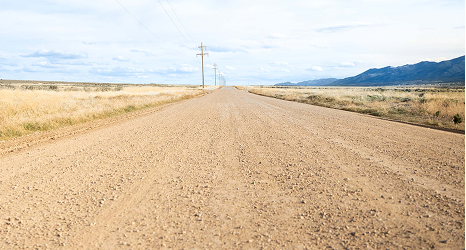
Topical treatments like chlorides and resins sit on top of the road, where rain easily washes them into the ditch. But Perma-Zyme works differently. It reacts directly with the clay fines already present in your aggregate mix, triggering a catalytic reaction that locks soil particles into a dense, cement-like structure. Because this bond occurs at a molecular level, it does not leach out during heavy rains or spring freeze-thaw cycles.
Unlike Portland cement, which creates a rigid and brittle base, enzyme-stabilized soil mixed with gravel allows for natural flexibility. A two-year Iowa State University study found that enzyme-stabilized gravel road sections maintained higher bearing strength than untreated sections. At the end of the study, treated sections demonstrated CBR values 2.5 to 4.5 times higher, depending on the compaction method, and showed less visible surface deterioration.
And roads that have been treated with Perma-Zyme resist rutting and cracking under heavy axle loads from agricultural transport, farm equipment, and heavy trucks. In fact, at the end of the two-year study, researchers saw only minor rutting and degradation on the enzyme-treated sections of road. Plus, Perma-Zyme can be applied using standard road maintenance equipment: a water truck, motor grader, and roller compactor.

Any fresh gravel on an unstabilized road bed will eventually end up in the ditch, which causes additional drainage issues. Perma-Zyme changes the cycle because it tightly binds fine clay particles around the aggregate, creating a dense surface layer that seals out water.
When rain stays on top of the road crown and flows cleanly into drainage ditches instead of soaking into the subgrade, the road maintains its shape. You stop losing surface gravel, eliminate rutting, and drastically reduce dust generation.
Managing county roads does not have to mean repeating the same maintenance battles every year.
By stabilizing your road bases with an enzyme solution rather than relying on constant re-graveling or temporary suppressants, your department can:
Proactive soil stabilization with Perma-Zyme transforms high-maintenance gravel routes into durable, predictable assets. Over time, those savings could make a big difference in your county road budgets and offset any rising costs.
Discover how you can use Perma-Zyme to build gravel roads that last longer with less maintenance, so you can do less rework and free up your crews.
Most dirt roads need constant grading or gravel, but now you can save time and labor with Perma-Zyme for unpaved road stabilization. Learn how it...
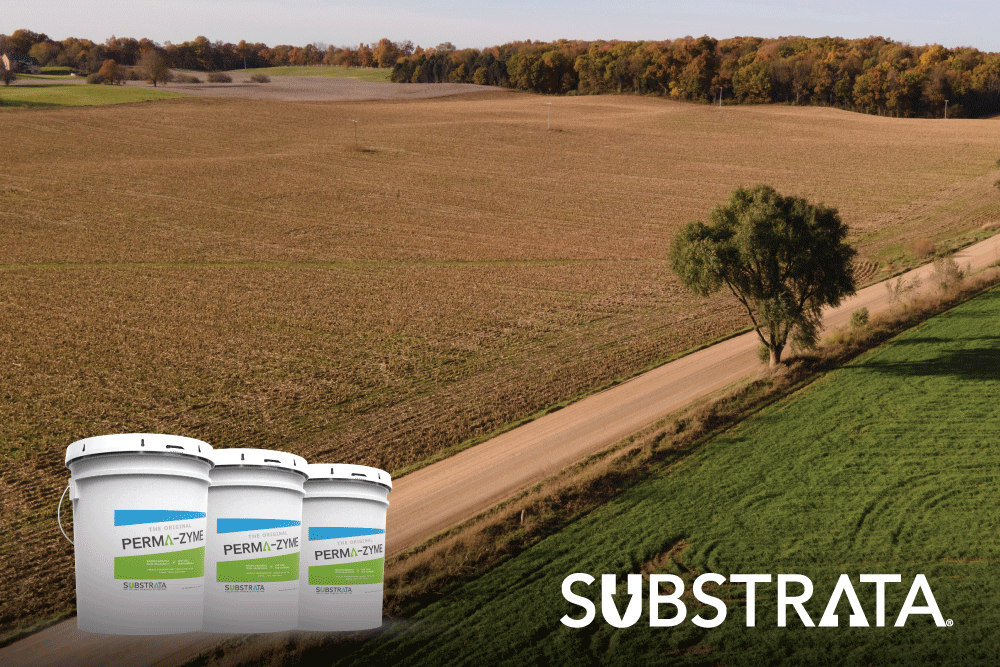
Discover how to build durable roads with Perma-Zyme, the enzyme soil stabilizer that lasts longer with less maintenance, saving you time and money.