
10 Easy Steps To Build A Road With Perma-Zyme
Discover how to build durable roads with Perma-Zyme, the enzyme soil stabilizer that lasts longer with less maintenance, saving you time and money.
6 min read
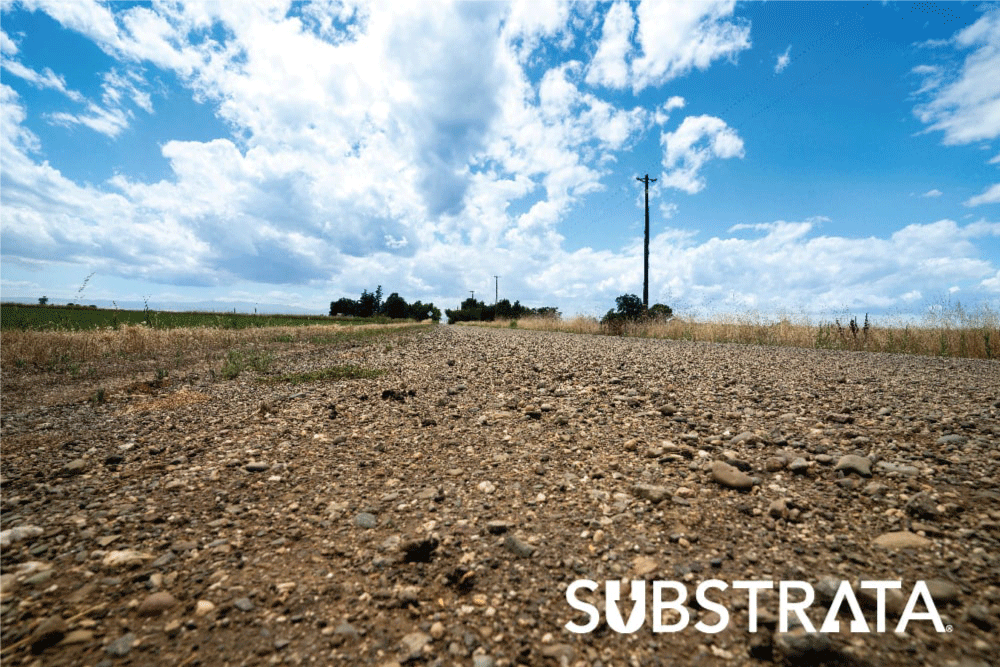
Gravel roads are essential lifelines in rural areas that would otherwise be inaccessible. However, maintaining them has always been expensive and time-consuming... until now! With Perma-Zyme, you can build gravel roads that last longer with less maintenance. We’ll explain how Perma-Zyme solves common gravel road problems. Then, we’ll teach you how to apply it so you can start saving time and money on your roads.
Perma-Zyme contains enzymes that cause soil particles to chemically react with each other, making them bind together into a hard, concrete-like surface. Soil will also bond around the gravel in the road to strengthen soil over 10 times, and it will bind gravel to the road surface to reduce material loss.
Perma-Zyme treated roads resist water and erosion, solving common problems such as:
With fewer surface issues, roads need far less maintenance. In fact, most customers report that they grade just one to four times per year, saving time and money on gravel road repair and freeing up their crews to work on other projects.
You’ll experience numerous benefits when you build a gravel road with Perma-Zyme. Here are just a few of our customers’ favorites.
Perma-Zyme users save up to 80% on road construction. That’s because Perma-Zyme stabilizes gravel roads by strengthening the underlying soil over 10 times and preventing erosion. It also acts similar to glue: it helps hold the aggregate in place to prevent costly material loss. Customers in Michigan reported that they saved an average of $5,800 per mile per year when they used Perma-Zyme.
One Perma-Zyme treatment resists erosion and reduces rework for years. Customers regularly report that their gravel roads last 10 years or longer with minimal maintenance. County Road 62 in Princeton, California, has lasted even longer: 15+ years with just one Perma-Zyme treatment and one gravel application!

Applying Perma-Zyme is so simple that some people have completed their projects in as little as one day. The product is just as quick and easy to clean up as it is to apply. You can do the job with basic construction equipment, or if you don’t have access to certain machines, you can use tractors or other equipment you have on hand.
Perma-Zyme works in all climates so you can use it anywhere. Our customers have treated thousands of miles of gravel roads in numerous places, including Nevada, Alaska, Texas, Michigan, Mexico, Canada, South America, Africa, and Eastern Europe.
While Perma-Zyme isn’t technically a dust suppressant, it can significantly reduce dust. That’s because the enzymes permanently bond soil particles together, preventing them from escaping into the atmosphere.
Perma-Zyme is 100% organic, non-toxic, and eco-friendly, so it doesn’t require PPE and won’t harm the surrounding area. It’s even safe for building farm roads near crops and livestock.
Building a gravel road with Perma-Zyme is much simpler than many traditional construction methods. In this article, we’ll walk you through the basics:
For full details, download the free Step-by-Step Guide to Applying Perma-Zyme. It’ll teach you everything you need to know about building a gravel road. (Plus, you’ll get even more tips for a successful application.)
Most soils work well with Perma-Zyme, especially those that contain clay, limestone, or decomposed granite. Soils should also contain at least 20% coarse material to make it strong enough to support traffic.
Since every soil’s composition is unique, you can discuss specifics of your project and soil with our application experts. They can help you determine whether Perma-Zyme is a good fit for your project and if a soil evaluation is necessary.
Planning your project encompasses designing your gravel road and preparing for your Perma-Zyme application. Here are the factors you’ll need to consider.
Aggregate comes in many types made for many uses, so you’ll need to choose the right type, quality, size, and strength for your project. For example, you wouldn’t want to use large or jagged rock on a county road because regular car tires couldn’t handle it, and you wouldn’t want to use small pebbles on a mining road because the heavy haul trucks would pulverize them into dust.
You’ll also need to decide how much gravel to apply to your road’s surface and when to apply it. The thickness of the gravel layer will vary depending on what you’re using the road for, but we typically recommend one to two inches of gravel. You can apply it either during compaction or at least 72 hours after construction. (More on each option in a minute.)
You’ve likely already begun considering the budget for your project. Way to stay ahead of the game! Now’s the time to make sure you’ve got all your i’s dotted and t’s crossed. Several factors can affect the cost of your project, including the project size, labor, material costs, and soil amendments.
Your project timeline includes more than construction day. It should also include time to get approvals, community input, and necessary materials. Remember to consider any and all factors that could impact your timeline.
When choosing a date to apply Perma-Zyme, be sure there’s no rain in the forecast and that temperatures will remain between 40°F to 115°F for at least 72 hours after construction so the road can cure fully.
Applying Perma-Zyme typically requires motor graders, water trucks, a padfoot compactor, and a smooth wheel compactor. For gravel roads that have been in place a long time and are extremely hard, you may also need a reclaimer to break up the soil and rock. Missing a piece of equipment? That’s okay—you can make these handy substitutions.
The road’s length and lane width will help determine how much Perma-Zyme you need. And if you’ve wanted to widen your gravel road, now’s your chance!
To prevent flooding, your road will need drainage features—such as a crown, sloped shoulders, and roadside ditches.
Traffic volume and type will influence the Perma-Zyme treatment depth and what gravel you choose to use. Roads that see heavy traffic (such as mining and logging haul roads) need to be stronger than roads that see light traffic (such as private driveways), so you’ll mix the Perma-Zyme deeper into the soil and choose stronger aggregate.
We recommend the following depths based on traffic type:
The amount of Perma-Zyme you need will depend on the length, width, and depth of the road you build. Use this handy calculator to determine how much Perma-Zyme your project will require.

Now, you’ve put in the prep work and are ready to build a gravel road with Perma-Zyme. First, on construction day, remove any large debris from the road, like big sticks and piles of leaf litter. Then, rip up the soil using either a motor grader with a ripper attachment or a reclaimer. Once you’ve reached the appropriate treatment depth, presoak the soil to around 80% of its optimum moisture content.
Refill the water truck and add the Perma-Zyme to it. Use the onboard mixer or drive around for about 15 minutes to thoroughly mix the Perma-Zyme and water. Then, spray the mixture onto the road’s surface.
Compaction is the key to a successful Perma-Zyme application. The more thoroughly you compact the road, the stronger the bond between the enzymes and the soil will become.
You can add one to two inches of gravel to the road’s surface before beginning compaction. Then, the compactor will work this gravel into the soil, which will bond around it to help prevent material loss. (You can skip this topcoat if you’d prefer to add gravel after construction; more on that shortly.)
Begin compacting the soil with a padfoot (aka sheepsfoot) compactor for aggressive compaction to create a strong, durable base. Then, switch to a smooth wheel compactor; it will push the soil and gravel particles even closer together while creating a smoother driving surface.
For treatment depths of more than six inches, compact the soil in six-inch lifts to allow thorough compaction.
Perma-Zyme takes around 72 hours to cure. During that time, allow only light vehicle traffic traveling at slower-than-normal speeds, and if at all possible, close the road for the first 24 hours. After the full three-day curing period ends, you can reopen the road to normal traffic.
If you chose to wait to apply your gravel topcoat, you’ll add it once the Perma-Zyme treated surface cures for at least 72 hours. (Applying gravel too early could prevent the soil from properly curing.)
To apply the topcoat, spray a dilution of one part Perma-Zyme to 10,000 parts water onto the treated area, then add one to two inches of gravel. The Perma-Zyme dilution will help the gravel adhere to the road’s surface.
Building a gravel road with Perma-Zyme is a simple, one-time process that reduces maintenance and rework long-term. It’s the ideal solution for rural counties, companies, and landowners who are looking to save time and money on maintenance!

Discover how to build durable roads with Perma-Zyme, the enzyme soil stabilizer that lasts longer with less maintenance, saving you time and money.
Explore practical ways to work Perma-Zyme soil stabilization into your budget so you can build better roads that last longer with less maintenance.
Check out these eight reasons our customers amend their soil to make it work better with Perma-Zyme and why they say amendments are worth the effort.