
7 Factors That Affect the Cost of Applying Perma-Zyme
Explore key factors that could affect the price of your Perma-Zyme application, including project size, quantity, soil type, labor, shipping, and...
8 min read
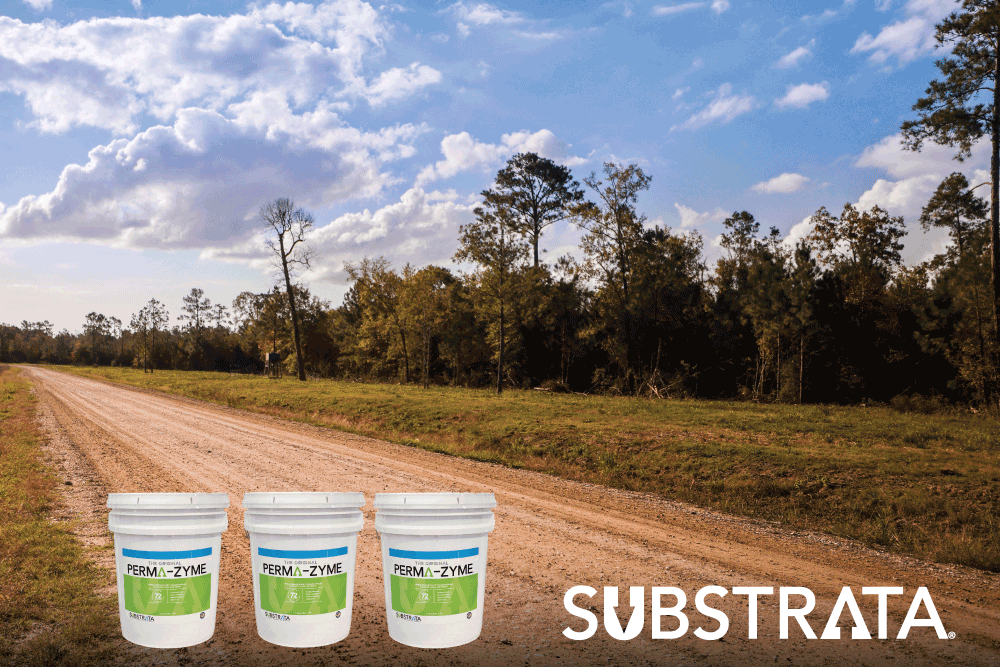
When you’re working with limited funds, every dollar counts. Perma-Zyme gives you soil stabilization that lasts longer with less maintenance, saving you money and labor. The key is getting that first batch into the ground. So, we’re sharing practical ways to work Perma-Zyme into your budget—including some creative options other customers have used!
You’ll learn how to:
To build a realistic budget, you need an idea of what your project will cost and how much money you’ll save once Perma-Zyme reduces your maintenance workload. So, these estimates are the best place to start.
The amount of Perma-Zyme you need will, of course, impact your budget. So, we built the handy Perma-Zyme calculator to help. Just enter your project dimensions, and it’ll tell you how much product you need. Then, ask your Substrata rep for a quote that includes the cost of Perma-Zyme and shipping to your location.

You’ll need some equipment and a few hands on deck to get Perma-Zyme into the ground. Here are some application costs to consider when creating your budget.
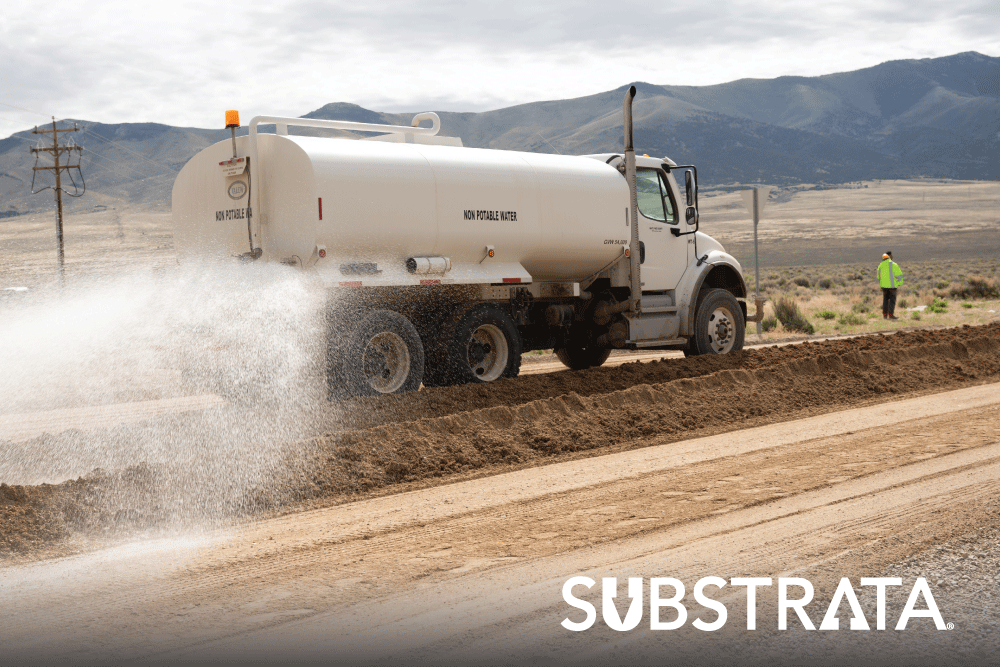
To apply Perma-Zyme, you will need standard equipment:
If you’re missing anything, you can make substitutions, borrow it from a neighbor, or rent it—the latter of which will increase your total project cost. You'll also need to budget for fuel for all the equipment you use.
Perma-Zyme is easy to apply. Some crews get the job done with three or four guys; they just hop off one piece of equipment and onto the next as needed. Others have a driver for each truck and an operator for each machine. Still others hire third party contractors to do the work.
Consider who’s doing the work and how much their labor costs. Your crew’s experience level and what type of equipment you have can impact how long the application takes. For new Perma-Zyme users, we typically recommend treating a half mile of two-lane road per day. And if you’re hiring a contractor, be sure you’re clear on their base price and fees before you accept the bid.
Some customers add gravel or chipseal to treated soil. Any topcoat you apply along with Perma-Zyme will add to your costs—unless you happen to have material on-hand.
Some customers also use soil amendments. Most soils work great with Perma-Zyme, but every type reacts a little differently. Soil that’s too fine may need additional rock for strength. Soil that’s too rocky or silty may not react chemically to Perma-Zyme, so you may have to add some more reactive material to get best results.
Remember, the more complete your budget estimate is, the easier planning will be and the fewer surprises you’ll have once you start.
When you bring a Perma-Zyme project to your supervisors, they’ll want to see more than the upfront cost. They’ll also want to see what they get in return. And that’s where Perma-Zyme shines. Perma-Zyme customers save up to 80% over traditional construction methods because it reduces or even eliminates the need for material hauling. Instead, you can use soil that’s already on your jobsite.
After construction, most customers grade just one to four times per year, and most can go at least six months without chlorides for dust control (some go several years!) Perma-Zyme can also lock in a gravel topcoat to prevent material loss. All of these factors cut down yearly maintenance costs; in fact, several counties in Michigan reported average savings of $5,800 per mile. Your exact savings will vary based on what kind of maintenance you’re already doing, what you’re using Perma-Zyme for, and what type of traffic will use the treated area.
The best way to estimate your savings is:
This way, you can show your team the minimum and maximum amounts you could save. You can also multiply those savings out over several years, since Perma-Zyme is a long-lasting soil stabilizer. Your Substrata rep can help you estimate your project’s lifespan and give you example numbers based on real projects that are similar to yours.
You’ve crunched the numbers; now, it’s time to get everyone else excited about Perma-Zyme! When people know what Perma-Zyme can do for them, they’ll be more willing to help you work it into the budget. This is the perfect time to share what you know and encourage your team to ask questions so they can move forward with confidence.
When it’s time to talk numbers, people often hem and haw. They don’t want to name a price because they’re afraid somebody will say, “No!” But transparency is the best policy. Showing decision makers the math makes purchase approvals easier. Once they see the long-term saving potential, most people become more willing to spend money upfront. (If Perma-Zyme is cheaper than your current solution, then you’ll have an even easier road ahead!)
You don’t have to convince everyone on your own. Your Substrata rep is here to help! Involve them early in the budgeting process so they can provide resources to help you answer questions from supervisors or commissioners, like case studies from similar counties. They can also help you set up a soil evaluation so your team can see how Perma-Zyme will work on your soil.
Even better, your rep can join a call with your team to showcase past projects, answer technical questions, and discuss the costs and potential savings. Sometimes hearing it straight from the source makes all the difference.
Now that your team’s onboard, you’re ready to work Perma-Zyme into the budget! Thankfully, you have lots of options. Here are a few that could work for you.
Shared projects can make Perma-Zyme more affordable for everyone. Many counties successfully partner with townships, precincts, or even private property owners to share project costs. For example, Genesee County in Michigan provided labor for a road in Montrose Township, while the township covered the cost of materials. In other cases, counties float the cost of labor and materials upfront, then bill the townships afterward.
Another option is to pool resources. Maybe you can call in an extra blade hand from a neighboring county, then help them with a future project. Maybe someone will lend you a smooth wheel roller if you let them borrow your water truck. Maybe you have a private company with multiple locations that could cooperate to get Perma-Zyme into the ground.
Working with people nearby is a practical way to save money and build stronger relationships in your community. And once you have prospective partners, we’ll help you explain how Perma-Zyme benefits them with better roads, less maintenance, and happier communities.
Sometimes Perma-Zyme fits under more than one budget line item. For example, you may have a category for “road maintenance” and one for “dust control.” Since Perma-Zyme does both, it could be eligible for funds from both areas of the budget. Combining funds like this can help you cover the upfront costs without exceeding any single line item. As a bonus, it reduces maintenance and dust control, so both line items will see savings in the future.
This option is somewhat rare, since grants are usually for state-run projects rather than county or private ones. But, sometimes there are exceptions. You may be able to apply for infrastructure or environmental grants. (Good thing Perma-Zyme is eco-friendly!) Programs that promote dust control, erosion prevention, or reduced emissions may also qualify. And while no one ever wants this to happen, you may be eligible for relief grants if a natural disaster impacts your area.
If your current budget is locked in, don’t worry. Another funding cycle is just around the corner, and you can start planning for next quarter right now.
Work with your Substrata rep to develop a proposal and gather supporting resources, so you can line up approvals and get ready to move forward when funds become available. Remember, the sooner you apply Perma-Zyme, the sooner you’ll start saving on labor, materials, and maintenance.
How you plan and carry out your Perma-Zyme application can make a big difference in its overall cost and long-term performance. We want to make sure you get the most out of Perma-Zyme, so you can make every dollar count.
If you’re new to Perma-Zyme, we encourage you to start with a pilot project. Apply Perma-Zyme and monitor its results for a certain time. Once you and your team are satisfied, you’re ready to reorder and go to work on more projects!
We often recommend starting with three miles: one that’s in rough shape, one that’s already in good condition, and one that’s so-so. This approach helps you see firsthand how Perma-Zyme performs in different soil and traffic conditions, and it gives your team measurable results that will motivate them to move forward!
Perma-Zyme is easy to use, and you can make it even easier with the right process. Here are some tips we give our customers:

When you book an onsite consultation, a Substrata rep will come to your jobsite and offer real-time guidance during your application. They can walk your roads with you and help your crew know when soil reaches optimum moisture, when to put Perma-Zyme into the ground, and when you’ve compacted the soil enough.
Onsite consultations cost extra, but our customers say they’re worth it because they help you get the best results so you can do less rework and save more on maintenance long-term. Plus, that real-time input helps if your crew is new to using Perma-Zyme. A little guidance goes a long way to making sure you get the most out of every gallon!
To get the most bang for your buck, start by applying Perma-Zyme to areas that need the most maintenance. Some examples include areas that:
Improving these areas will offer the biggest payoff for the most people. You’ll free up your crews for other essential projects, and you’ll get to field fewer complaints (hooray!) With those results, getting your team onboard for the next application will be even easier. You can take the money you’re saving on maintenance and use it to bring Perma-Zyme to other areas.
Budgeting for soil stabilization shouldn’t be stressful. That’s why we work with you to work Perma-Zyme into your budget—whether that’s estimating the costs, getting your team onboard, finding the funds, or making the application as cost-effective as possible.
The long-term savings are worth the effort; most of our customers say Perma-Zyme pays for itself within just one year. Even better, you’ll free up your crews to work on other crucial projects. With a little planning and a little Perma-Zyme, you can make roads that last longer with less maintenance.

Explore key factors that could affect the price of your Perma-Zyme application, including project size, quantity, soil type, labor, shipping, and...
Discover the 10 steps to apply Perma-Zyme to mining roads, drilling pads, and other heavy industrial areas for lasting, cost-effective soil...
Using Perma-Zyme is simple and straightforward—especially when you follow these eight tips! Find out how to get the best results from your...